
Home / Pool Care Guides / How Often Should You Clean a Pool Filter in Central Texas?
How Often Should You Clean a Pool Filter in Central Texas?
Cartridge, DE or sand? Learn the practical signs of a dirty filter and why your pool’s normal pressure matters more than a calendar.
By Tejas Hills Pool and Spa · October 27, 2026
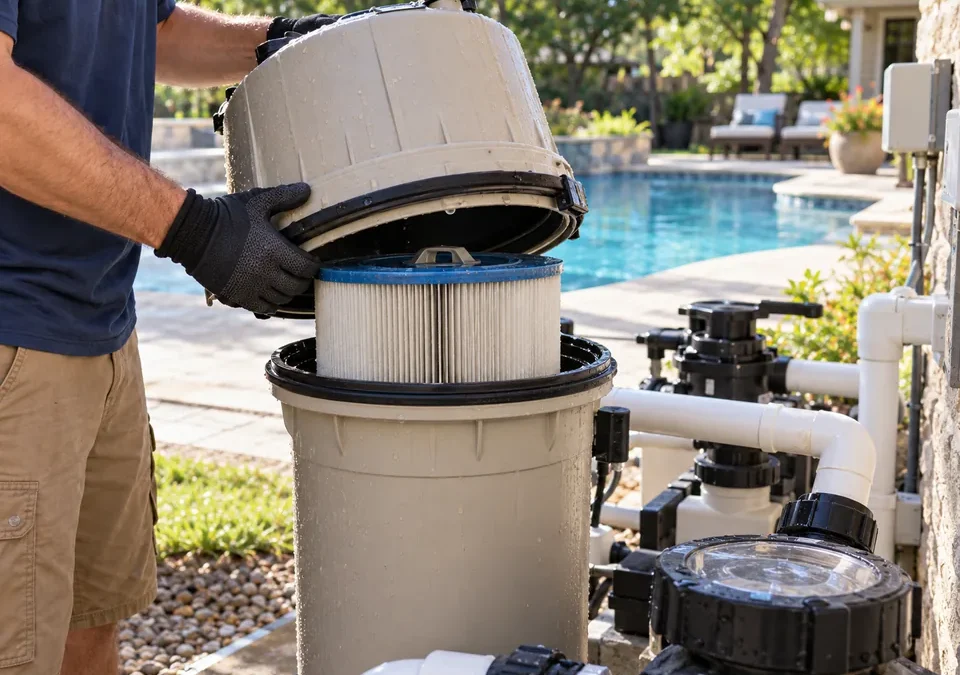
The short answer: let the filter and pool conditions guide you
There isn’t one safe cleaning interval for every pool filter. A filter at a pool surrounded by oak trees may collect debris differently from one at a more open property. Heavy use, algae treatment, recent storms, equipment size and filter type can all affect how quickly a filter needs attention.
For Central Texas homeowners, the best starting point is to identify the filter type, learn the manufacturer’s cleaning procedure, record its clean operating pressure and watch for changing circulation. A weekly service visit can help identify a developing restriction, but a calendar reminder alone cannot tell you whether the filter is clean.
Why does a dirty filter matter?
A filter traps particles so that water can recirculate more clearly through the system. When media becomes loaded with debris, water flow may be restricted and water clarity can suffer. The pump may be working against more resistance, and some equipment can show flow-related errors. An apparently clean surface does not prove the filter is operating at its best.
Quick takeaway: Compare current operation with the manufacturer’s normal baseline, not with a pressure number found on another pool’s equipment.
Cartridge, DE and sand: similar purpose, different care
Cartridge filters
Cartridge systems generally use pleated elements that can be removed, cleaned and eventually replaced. Cleaning methods and replacement criteria vary by manufacturer and model. A neglected cartridge may be less effective even after a quick rinse if oils or embedded debris remain. A worn or damaged cartridge should be assessed rather than repeatedly cleaned without improvement.
Diatomaceous earth (DE) filters
DE filters use fine filter media associated with a grid or other internal arrangement. Some systems require backwashing and media replenishment; others involve disassembly. The procedure must follow the manufacturer’s instructions, local disposal requirements and chemical handling precautions. Don’t assume that a cartridge-filter cleaning method applies to a DE tank.
Sand or other media filters
These systems use a granular bed and often feature a multiport valve, with backwashing used on some models. Valve positions, rinse cycles and pressures must match the equipment instructions. Never move a multiport valve while the pump is running unless the manufacturer specifically directs otherwise.
Four clues that it might be time for filter attention
- Pressure differs meaningfully from the clean baseline. A rise may indicate loading on some systems; unusually low pressure may indicate another circulation issue. Don’t assume all gauges or filters respond identically.
- Return flow feels weaker than normal. First consider whether the pump is intentionally at a lower speed, then report the change.
- The pool stays hazy despite correct measured water chemistry. A filtration problem is one possibility—not the only one.
- There was a significant debris or algae event. Storms, landscaping work and green-to-clean treatment can load a filter faster than usual.
Some manufacturer instructions use pressure increases such as 8–10 psi above clean baseline as a cleaning trigger for particular cartridge/DE systems. That number is not a universal rule. Always verify your actual filter’s documentation and safe operating limits before deciding.
Safety before any filter work
Filter tanks can be highly pressurized. Electrical equipment and nearby water also introduce hazards. Never loosen the clamp, lid, union or drain on a pressurized filter. Servicing should involve isolating electrical power and relieving pressure using the manufacturer-approved sequence. If you are not qualified or comfortable, have a professional handle the cleaning. Follow the chemical product’s label; never mix chemical cleaners casually.
A visually wet area or leaking connection is a reason to stop and request assessment, not to tighten parts under operating pressure.
What can a service team check?
A service provider can identify the system, compare operation against its baseline, inspect accessible conditions, assess cartridge or other media needs and help determine whether cleaning or replacement is appropriate. A filter issue can coexist with a pump, valve or plumbing problem, so diagnosis matters when low flow persists after reasonable maintenance.
Learn about Filter Cleaning & Replacement or see our pump-circulation warning signs if a noisy or air-filled pump accompanies the problem. Regular weekly service helps catch routine changes before they become surprises.
A practical Hill Country checklist
If you own a pool in Falconhead or Belvedere, keep a photo of your filter model label, last cleaning date, and typical pressure at normal pump RPM. Share those details when asking for a quote. Local tree cover, storm debris and use patterns can affect filter loading, but no neighborhood has a single prescribed filter-cleaning frequency.
Frequently asked questions
Do I clean a cartridge filter every week?
Not necessarily. Inspect the manufacturer’s guidance and actual pool conditions. Weekly observation is useful, but a full clean may be needed more or less frequently depending on the system.
Does cloudy water mean my filter is broken?
No. Water chemistry, algae, fine particles and circulation can also affect clarity. Start with reliable testing and a broader assessment.
Should I open the filter if the pressure is high?
Not while it is pressurized. Opening a filter is a safety-critical job requiring the exact manufacturer’s shutdown and depressurization procedure.
Get an answer for your actual system
Tejas Hills can discuss filter-care options and equipment concerns after learning what you have installed.
Related guides
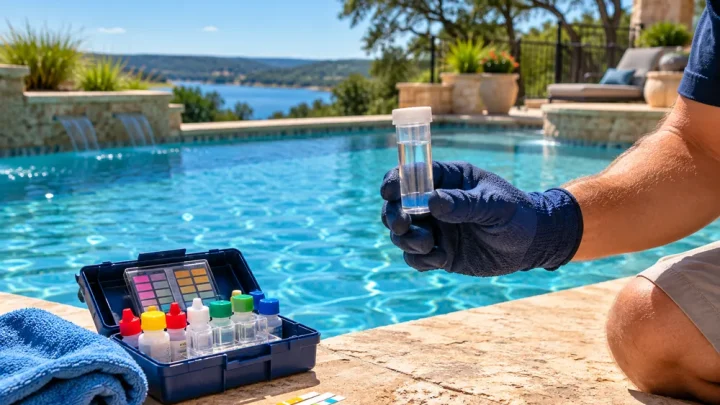
A practical guide to weekly cleaning, water testing and equipment checks for Lake Travis and Hill Country pool owners.
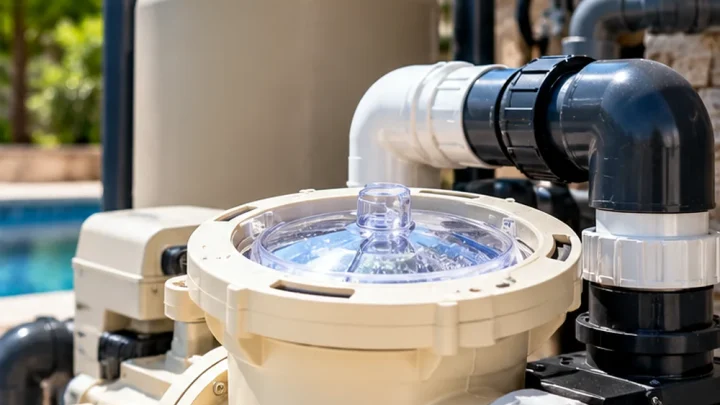
Low flow, air bubbles or a noisy pump? Learn what you can observe safely and when pool equipment needs professional diagnosis.
Saltwater still means sanitizer, testing and filter care. See the habits that help keep a Lake Travis salt pool predictable.