
Home / Pool Care Guides / Pool Pump Not Circulating? A Homeowner’s Guide to Warning Signs
Pool Pump Not Circulating? A Homeowner’s Guide to Warning Signs
Low flow, air bubbles or a noisy pump? Learn what you can observe safely and when pool equipment needs professional diagnosis.
By Tejas Hills Pool and Spa · October 27, 2026
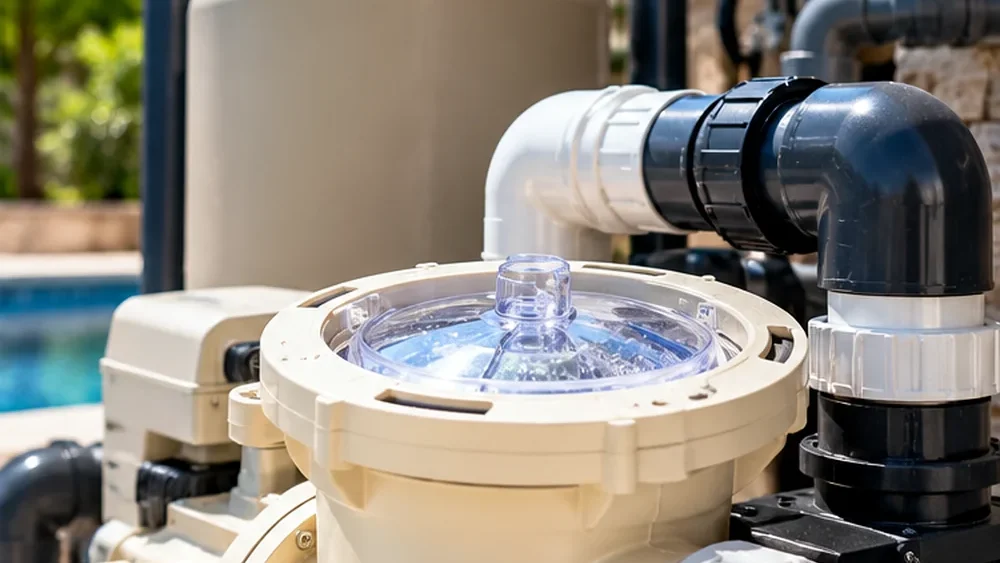
The symptom matters more than the guess
When a pool pump sounds different, the returns seem weak or a pool suddenly loses circulation, it’s tempting to assume the motor has failed. Yet the same visible symptom can have several causes. A full skimmer basket, water-level issue, restricted filter, air entering a plumbing connection or a pump-related mechanical problem can each affect flow.
For homeowners in Lakeway, Rough Hollow or other Lake Travis neighborhoods, recording the specific symptom helps technicians narrow the possibilities. You don’t need to diagnose the equipment yourself to describe what changed.
Seven signs worth reporting
1. Little or no movement at the returns
If water is not returning to the pool as expected, circulation may be interrupted. Compare with normal operation rather than assuming every system should have the same flow. Also note whether any spa jets or water features behave differently.
2. Bubbles returning to the pool
A few bubbles immediately after a system change can be different from steady bubbles during operation. Persistent air may suggest air entering a line or pump-side issue. Describe when it starts and whether it goes away.
3. A pump that repeatedly loses prime
If the pump cannot maintain a normal water-filled operating state, forcing it to run can cause damage. Stop and request diagnosis if the manufacturer’s manual indicates an unsafe or dry-running condition.
4. Unusual grinding, rattling or screeching
New noise can mean debris, vibration or worn equipment, but the sound alone is not a definitive diagnosis. Stay away from moving components and avoid operating equipment that seems unsafe.
5. The pump starts, then stops unexpectedly
A timer, automation schedule, protective shutoff, power interruption or an actual fault may be responsible. Note the time and any error code on a visible display; do not override safety switches.
6. Filter pressure has changed markedly
Pressure varies by pool and equipment. A change from the system’s clean baseline can offer a useful clue, but a pressure gauge is not a complete diagnostic tool. Never open a filter while it is pressurized.
7. Cloudy water despite routine cleaning
Poor filtration or circulation can leave suspended particles in the water. Water chemistry may also be involved. Read our cloudy water and algae guide for a safe starting point.
What can you check without opening equipment?
You can observe the displayed settings on an accessible controller, note whether a visible breaker appears tripped without repeatedly resetting it, check pool water level from the deck, and look for debris at skimmer openings while the equipment is safely off. Photograph any fault code, label or leak without touching electrical components. Turn off unsafe equipment and call a professional if there is smoke, burning smell, active water near electrical components or rapidly worsening leaks.
Do not remove filter lids, unscrew pipe unions, open an electrical enclosure or work near energised/wet connections. Pool systems combine electricity, moving parts and pressurized vessels; unexpected release of water or pressure can cause injury.
What to tell the technician: equipment brand/model if visible, the symptom, whether it happens continuously or intermittently, any recent storm or maintenance change, and your neighborhood or address.
Could the pump be running at the wrong speed?
Modern variable-speed pumps may use different programmed speeds for filtration, spa jets and cleaning. A lower speed isn’t automatically a failure. The U.S. ENERGY STAR guidance explains that a pump can operate at different speeds for different circulation jobs, which can reduce energy use while meeting the system’s required flow. But some equipment needs a minimum flow to operate safely; altering RPM settings without understanding the system can create problems.
If you’re concerned about programming or automation, ask for an equipment assessment instead of changing values blindly. Equipment Diagnostics & Repairs can help identify whether the issue is an ordinary setting, a restriction or a component needing attention. Do not assume that Tejas Hills offers heater installation; heater diagnosis is a separate matter and installation is not currently offered.
A local service question, not a universal pump prescription
A pool in Rough Hollow with a spillover spa may have a different plumbing arrangement from a simple pool in Rocky Creek. Describe your equipment and what it is doing so the service team can determine scope and availability. Equipment work is evaluated individually.
Frequently asked questions
Should I keep running a noisy pool pump?
If it is making an alarming noise, losing prime or appears unsafe, shut it off according to the manufacturer’s safety directions and request professional help. Avoid repeated restart attempts.
Is low pool flow always a pump replacement problem?
No. Restrictions, water-level conditions, filtration and control settings can also cause low flow. A diagnosis should come before replacement recommendations.
Can a variable-speed pump use less energy?
Yes. ENERGY STAR explains that appropriately programmed variable-speed units can reduce energy use compared with running a conventional pump at high speed constantly. Exact savings depend on the system and operating schedule.
Tell us what your equipment is doing
No need to guess a repair. Send your symptoms and location to Tejas Hills, and we’ll discuss the next step.
Further reading: ENERGY STAR: Pool Pumps; U.S. DOE/PNNL: Variable-Speed Pool Pumps.
Related guides
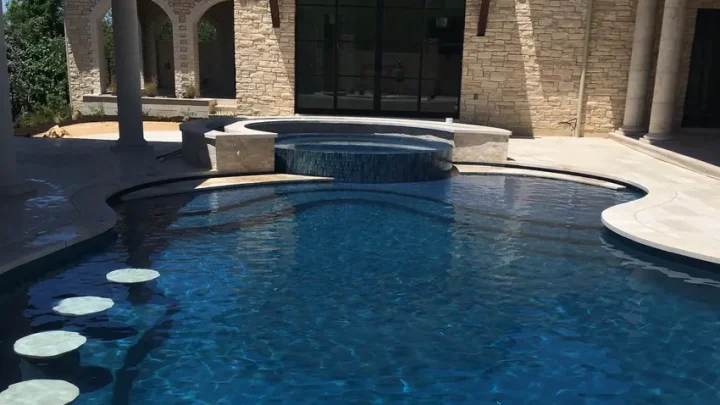
Know the difference between algae, cloudy water and a circulation problem—plus the safest next steps before anyone swims.
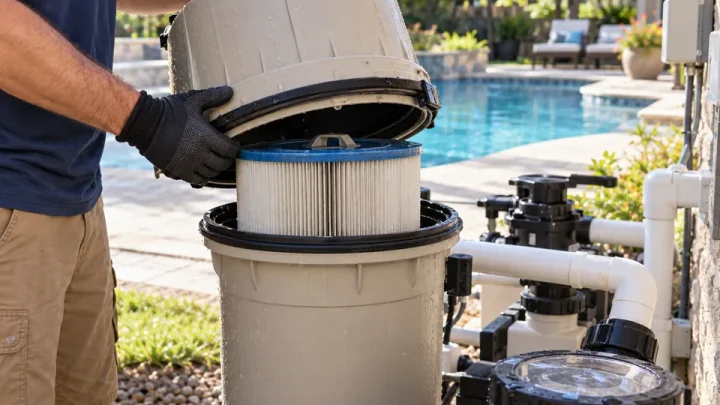
Cartridge, DE or sand? Learn the practical signs of a dirty filter and why your pool’s normal pressure matters more than a calendar.
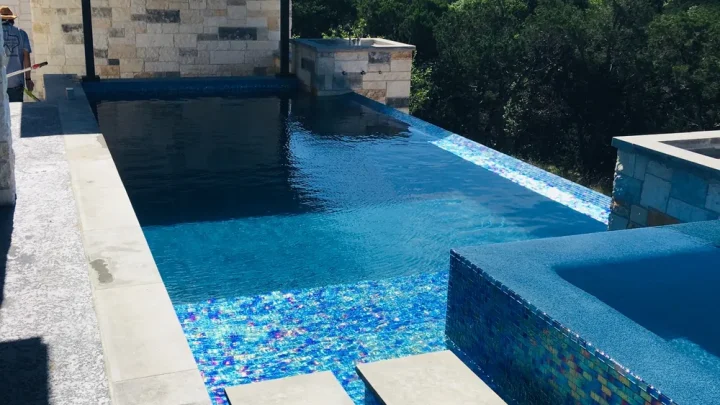
Saltwater still means sanitizer, testing and filter care. See the habits that help keep a Lake Travis salt pool predictable.