
Home / Pool Care Guides / Green or Cloudy Pool Water in Lake Travis? What to Check First
Green or Cloudy Pool Water in Lake Travis? What to Check First
Know the difference between algae, cloudy water and a circulation problem—plus the safest next steps before anyone swims.
By Tejas Hills Pool and Spa · October 27, 2026
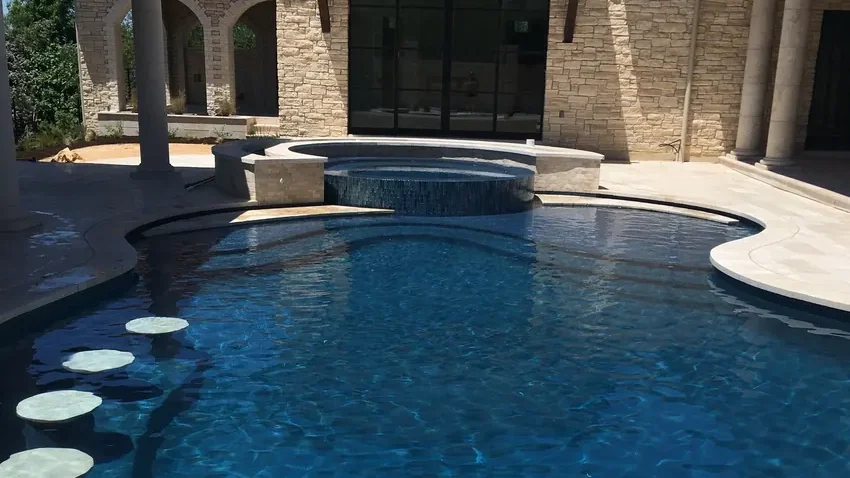
First things first: do not swim in water you cannot assess
A green pool is an obvious warning sign, but cloudy or unusually dull water deserves attention too. Water can look inviting while sanitizer or pH is out of range; conversely, poor clarity can make it difficult to see someone in distress underwater. If you cannot clearly see the pool floor or test results show unsafe conditions, keep swimmers out while you investigate.
In Lake Travis-area backyards, shifts in water clarity can follow heavy swimming, storms, debris, chemistry changes or equipment trouble. The visible symptom is important; it does not, by itself, prove a single cause.
Why is the water green?
Green coloration frequently suggests algae growth, especially when surfaces are slippery or a pool has had insufficient circulation or sanitizer. But appearance alone does not establish how extensive the problem is, what chemicals are appropriate, or whether filtration is also failing.
A professional assessment typically starts with reliable water testing and an examination of circulation, filter performance and the pool’s condition. The recovery process then depends on those observations. Brushing and removing debris may be part of the work, but a stubborn algae problem is not solved by hiding it under a one-off dose.
Some discolored water comes from metals or other contaminants rather than algae. That distinction matters because the correct response can differ substantially. Do not assume every green tint needs the same treatment.
Why does a pool look milky or cloudy?
Cloudiness can be associated with inadequate filtration, imbalanced chemistry, suspended particles, heavy swimmer use or a developing algae issue. One place to start is the filtration system: is water moving through the returns as expected? Is the pump operating? Is a basket packed with leaves? Has filter pressure changed from its normal baseline?
Quick takeaway: Clear water depends on both appropriate chemistry and effective circulation/filtration. Fixing only one side may leave the pool cloudy.
If the pump makes an unusual sound, loses prime or runs without normal return flow, switch to the pool-pump troubleshooting guide. Do not reach into running equipment, open pressurized housings or bypass electrical protections.
Five sensible first checks
1. Keep swimming on hold if clarity or sanitation is uncertain
Do not judge swimming safety by color alone. Verify disinfectant and pH with a reliable kit. The CDC’s residential-pool guidance calls for pool pH 7.0–7.8, with free chlorine at least 1 ppm, or 2 ppm when cyanuric acid is in use. Manufacturer and product instructions also apply. If results are unsafe, don’t swim until water meets the appropriate criteria.
2. Notice recent changes
Think about wind, a rainstorm, a pool party, an interrupted pump schedule or a large influx of leaves. These details can help a technician distinguish water-treatment and filtration concerns. Note when the change first appeared and whether it is getting worse.
3. Check basic circulation indicators
From a safe position, observe whether water returns are flowing as they normally do and whether the pump is operating according to its schedule. Never open a filter tank or electrical cabinet to investigate. A low-flow condition can affect how well chemicals are distributed and particles are filtered.
4. Avoid mixing or guessing with chemicals
Do not pour multiple products together, mix concentrated pool chemicals, or copy a chemical dose from a different pool. Your pool volume, surface, stabilizer level, equipment and actual measured chemistry determine appropriate treatment. Improper handling creates real injury risks.
5. Get a plan for recovery—not just temporary color improvement
For a truly green pool, you may need staged treatment, brushing, debris removal, filter attention and follow-up tests. Ask what counts as a successful outcome and how the result will be verified before swimming resumes. Green-to-clean help is a different scope from weekly pool service.
What makes Hill Country water care different?
Residential pools around Bee Cave, Serene Hills and Lakeway vary in sunlight, landscape debris and bather load. Those differences can contribute to changing conditions, but there is no special neighborhood-only chemical formula. Reliable testing and system assessment are more valuable than broad claims about local water.
If you live in Bee Cave or Serene Hills, see those service-area pages to inquire about local availability. The advice above applies across pool designs, even when treatments differ.
Frequently asked questions
Can I swim if the water is a little cloudy?
If you cannot clearly see the floor or water sanitation is uncertain, do not swim. Clear visibility and appropriate disinfection both matter.
Will running my pump longer always clear the pool?
Not necessarily. A clogged filter, insufficient flow, incompatible treatment or water-balance issue can persist despite longer pump run time. Diagnose the cause rather than assuming time alone is the remedy.
Is one green-to-clean visit always enough?
Not always. The appropriate number of treatments and follow-up steps depends on the pool condition, circulation and water testing results.
Clearer water starts with a good diagnosis
Tell Tejas Hills what changed, what you’ve observed and where the pool is located. We can discuss a suitable service assessment and next steps.
Related guides
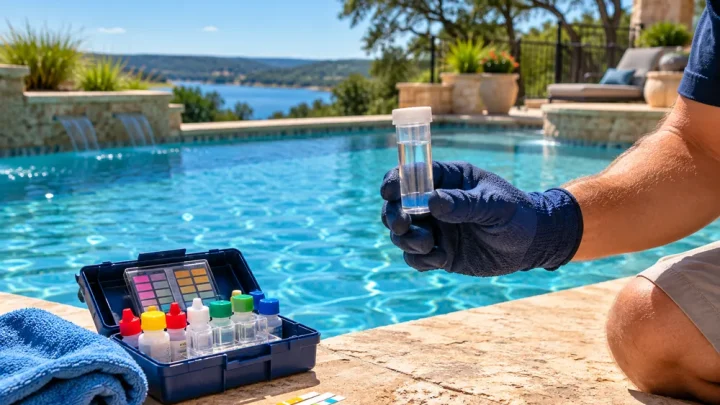
A practical guide to weekly cleaning, water testing and equipment checks for Lake Travis and Hill Country pool owners.
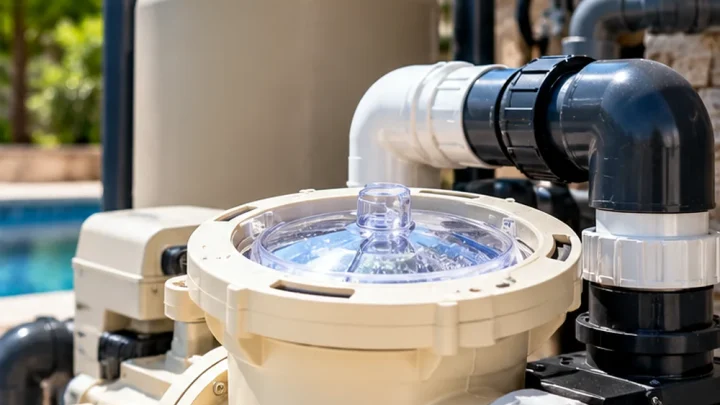
Low flow, air bubbles or a noisy pump? Learn what you can observe safely and when pool equipment needs professional diagnosis.
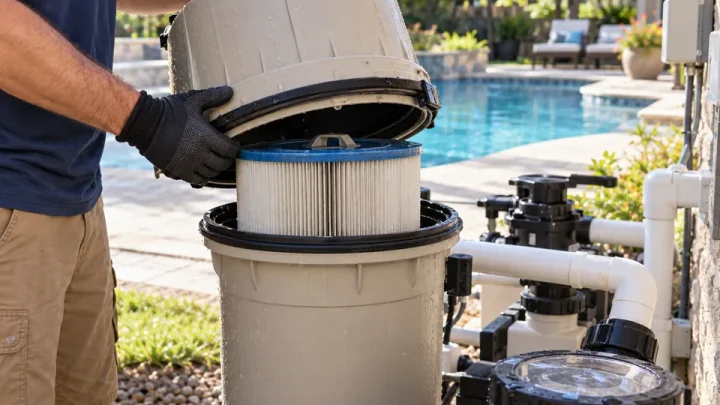
Cartridge, DE or sand? Learn the practical signs of a dirty filter and why your pool’s normal pressure matters more than a calendar.