
Home / Pool Care Guides / Saltwater Pool Maintenance in Lake Travis: What Owners Should Know
Saltwater Pool Maintenance in Lake Travis: What Owners Should Know
Saltwater still means sanitizer, testing and filter care. See the habits that help keep a Lake Travis salt pool predictable.
By Tejas Hills Pool and Spa · October 27, 2026
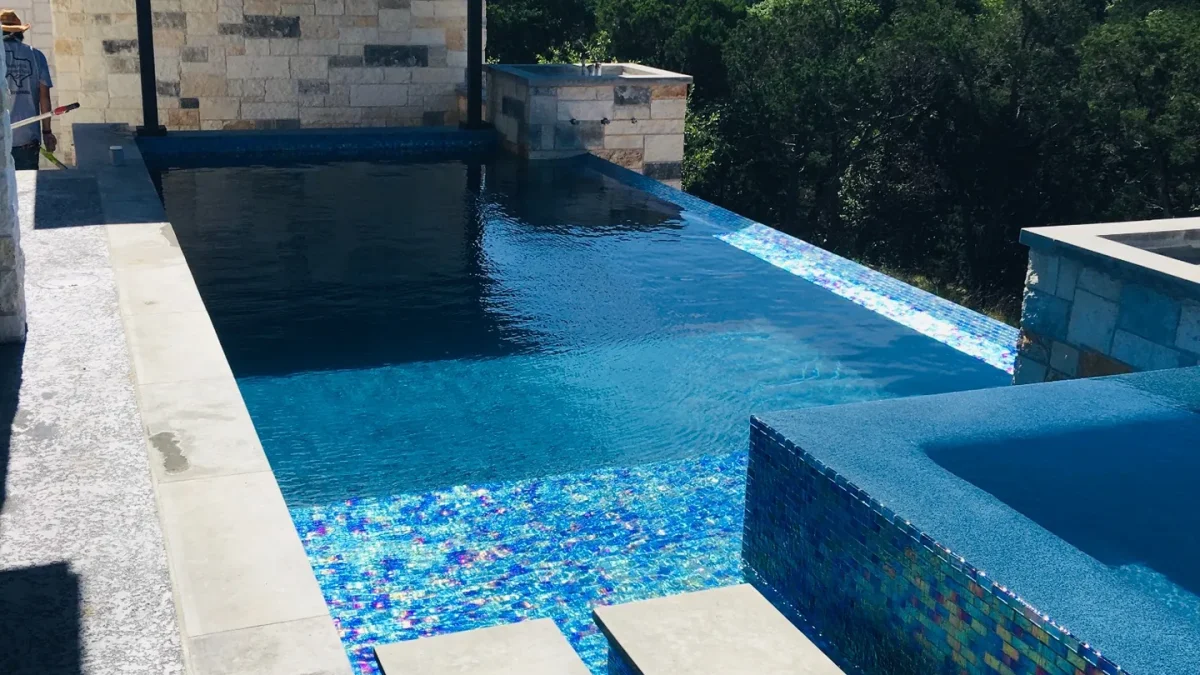
Saltwater pools still need chlorine and regular care
A saltwater pool is often described as a low-maintenance alternative to a traditionally chlorinated pool. That can be misleading. Most residential saltwater systems use a salt chlorine generator to convert dissolved salt into chlorine. The pool still depends on disinfectant residual, appropriate pH, circulation and filtration. A generator makes chlorine; it does not make testing optional.
For homeowners in Lakeway, Bee Cave and surrounding Hill Country communities, understanding the system is more useful than treating “saltwater” as a complete maintenance plan.
What a salt chlorine generator does—and doesn't do
The cell produces sanitizer while the unit operates under the right conditions. Its output may be adjustable, and the pool’s actual sanitizer level depends on more than that setting: bather demand, sun, stabilizer, run time, circulation and the condition of the generator itself all matter.
A salt system does not automatically remove debris, maintain filtration, clean walls, detect every equipment fault or guarantee balanced pH. A clear-looking pool can still test poorly. Keep an eye on both the controller’s alerts and independent water-test results.
Quick takeaway: “Saltwater” describes how chlorine is produced, not a chlorine-free pool.
What should a homeowner check routinely?
Sanitizer level and pH
Follow the CDC’s guidance for residential pools and the equipment manufacturer’s instructions. The CDC recommends pH 7.0–7.8, with at least 1 ppm free chlorine for unstabilized pools and at least 2 ppm when cyanuric acid is present. A salt generator’s percentage setting is not a direct measurement of free chlorine in the water.
The CDC recommends testing chlorine and pH at least twice daily, especially during periods of use. These checks continue between a technician’s weekly visits.
Cell and system alerts
An illuminated salt or flow warning can have different explanations: temperature, salinity outside the specified range, poor flow or a maintenance issue. Do not assume an alert proves that salt must be added. Verify the manufacturer’s instructions and, if necessary, ask a professional to evaluate the system.
Circulation and filter condition
Chlorine generation and proper mixing depend on adequate water movement. If a pump is not circulating or a filter is restricted, salt-system performance can suffer even when the controller appears operational. Read the pool pump circulation guide and filter-cleaning guide.
What about pH and scaling?
Saltwater systems can experience pH movement and scale-related maintenance concerns, especially when water chemistry isn’t managed consistently. Cloudy patches on the cell or signs of deposit buildup warrant assessment. Cleaning the cell with acid or other chemicals without reading the manufacturer’s manual can be hazardous and may damage the equipment.
Hardness, alkalinity, calcium balance and other measurements may matter for particular plaster, stone, heater and salt-cell systems. A professional should interpret the complete water profile rather than chasing one reading in isolation.
Automation is helpful—when it is configured correctly
Modern controllers can schedule pumps, salt generators, water features and other equipment. Helpful automation still needs periodic checks. A programming change, sensor concern or incompatible run-time setting can produce inconsistent results. Keep a record of alarms or changed schedules and ask a specialist before overriding safety settings.
Tejas Hills offers Salt & Automation service and Equipment Diagnostics, subject to equipment and service-area availability. That may involve checking operating behavior, interpreting common alerts and deciding when parts or specialized service are needed. The services included in an appointment depend on your equipment and the agreed scope of work.
A maintenance mindset for Lake Travis homeowners
A pool in Vistancia may have different sun exposure, usage and equipment from a property in Bee Cave. Those factors affect sanitizer demand and upkeep much more than a neighborhood label. An individualized plan combines regular chemistry monitoring, adequate filtration and sensible equipment follow-up.
Frequently asked questions
Is saltwater safe without testing?
No. A generator cannot tell you everything about sanitizing water conditions. Independently test sanitizer and pH and follow appropriate pool safety guidance.
Does salt replace chlorine?
In a common salt-chlorine system, salt is used to generate chlorine. It is not a substitute for maintaining an appropriate chlorine residual.
Should I add salt whenever an alarm appears?
No. Alarms may reflect flow, water temperature, calibration or other factors. Confirm the specific cause before adding products.
Questions about your salt system?
Tell our team what equipment is installed and what you’re noticing, including any controller messages.
Further reading: CDC: Home Pool and Hot Tub Water Treatment and Testing; ENERGY STAR: Pool Pumps.
Related guides
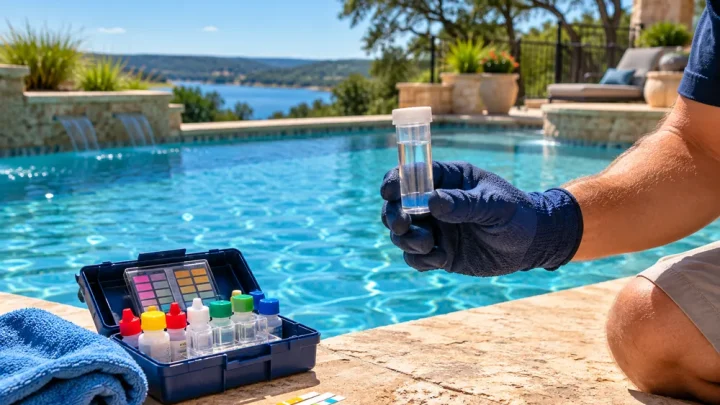
A practical guide to weekly cleaning, water testing and equipment checks for Lake Travis and Hill Country pool owners.
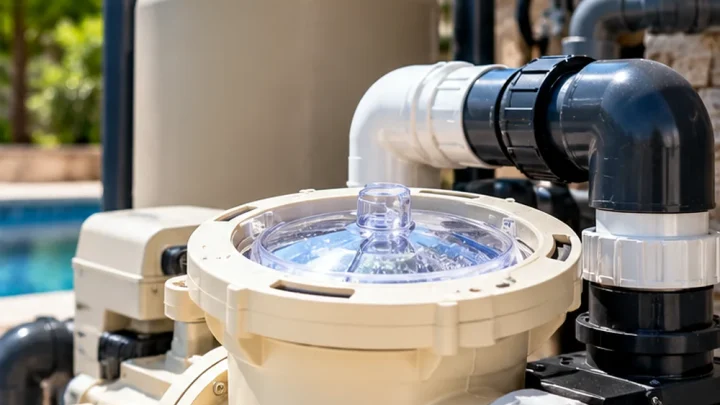
Low flow, air bubbles or a noisy pump? Learn what you can observe safely and when pool equipment needs professional diagnosis.
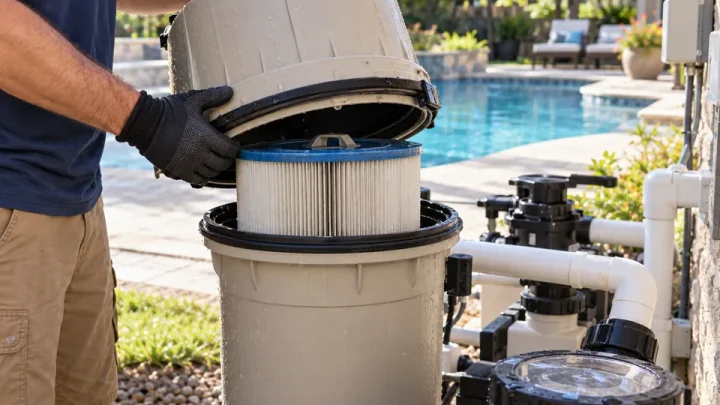
Cartridge, DE or sand? Learn the practical signs of a dirty filter and why your pool’s normal pressure matters more than a calendar.