
Home / Pool Care Guides / Pool Freeze Preparation in the Austin Hill Country: A Homeowner Checklist
Pool Freeze Preparation in the Austin Hill Country: A Homeowner Checklist
Cold snaps can threaten exposed pool plumbing. Prepare safely for Hill Country freezes and know when to call for equipment help.
By Tejas Hills Pool and Spa · October 27, 2026
Why a Texas pool needs a cold-weather plan
Most of the year, pool owners around Lake Travis think about sun, circulation and swimming. But a sudden freeze can put water-filled pipes, pumps, filters and other outdoor equipment at risk. Austin-area winter weather is variable enough that a pool owner should not rely on a single automatic setting or an assumption that it never gets cold.
The best freeze plan is specific to your plumbing, automation, power reliability and the equipment manufacturer’s requirements. This checklist is a starting point for discussion, not a set of instructions to open electrical equipment or drain pressurized systems yourself.
Before cold weather: make a safe plan
Know your equipment and operating mode
Locate the manuals for the pump, controller, heater and water features. Understand whether a freeze-protection feature is installed and what it actually controls. An automation display reading “freeze protection” does not necessarily mean every pipe, feature or isolated water line is protected.
Some systems circulate water when temperatures fall, while others require a particular equipment configuration or winterization procedure. A technician can check settings against the actual plumbing layout. Do not assume that keeping a pump running will protect equipment during a power outage.
Identify exposed and vulnerable components
From a safe location, look for above-ground runs, unusual exposed valves, water features or accessories connected to pool circulation. Don’t try to insulate or manipulate electrical components where water is present. Ask your service team about vulnerable lines and recommended protection appropriate to the system.
Keep the area accessible and informed
Know how to reach the company that services your pool, what alarms your controller may show and how to report a sudden problem. Take photos of visible equipment model numbers before the freeze if they will help a professional identify the system. Keep children and visitors away from pool equipment during unusual weather.
Quick takeaway: A freeze-protection plan must address both normal powered operation and what happens if electricity fails.
When freezing weather is forecast
Follow local official weather updates, including the National Weather Service Austin/San Antonio office. Conditions and timing change; don’t rely on an old forecast. If your equipment is not configured for freezing weather, seek individualized help before the cold arrives. Never open a filter vessel or remove plumbing connections while the system is running or pressurized.
For the home more broadly, Austin Water recommends knowing the household water shutoff and protecting exposed plumbing during freezing weather. That household guidance is useful context, but a swimming pool’s circulation system requires its own equipment-specific procedure and should not be treated as identical to house faucets.
What if the power goes out or you suspect freeze damage?
A power outage can interrupt circulation and automatic freeze functions. Your safe course depends on the duration, temperature and configuration of your equipment. Do not restart a visibly damaged, cracked or leaking system. If you suspect frozen lines or broken fittings, avoid opening unknown valves or electrical boxes. Follow the manufacturer’s emergency instructions and contact a qualified pool service provider.
If you detect active water around electrical equipment, a burning smell or an obvious electrical hazard, stay clear and contact qualified emergency/electrical help. Never improvise heating with a torch or other open flame near pool equipment.
After temperatures rise: check before assuming all is well
Once weather has passed, inspect visually for leaks, pooling water, split fittings and new warnings. Verify the equipment has not developed strange sounds or flow issues. Pressure-related leaks may only appear when the system operates, so a qualified check may still be needed even if the pad looks normal from a distance.
Normal pool testing remains necessary after a cold snap. Lower seasonal swimmer use does not make sanitizer and water chemistry irrelevant. Recheck water conditions before resuming swimming.
One-time seasonal pool care is different from heater installation
Tejas Hills lists One-Time & Seasonal services that may include freeze-related support depending on the pool and service availability. Equipment diagnosis is another distinct service. Tejas Hills does not currently offer heater installation. Availability and the scope of freeze-related support are confirmed individually; emergency response is not guaranteed. Ask for a specific assessment rather than assuming every pool can be protected by the same checklist.
Owners in Rocky Creek, Serene Hills and Falconhead can use the service areas hub to find their community and inquire about availability. Cold weather does not follow service-zone boundaries; the community links are for local navigation, not weather forecasts.
Frequently asked questions
Will an automatic freeze-protection mode always save my pool equipment?
No. Protection depends on the configuration, functioning power, sensors and plumbing. Not every exposed component is necessarily covered by the same program.
Should I open or drain my filter when temperatures fall?
Only if a qualified person follows the exact manufacturer-approved shutdown and depressurization procedure for that system. Do not open a pressurized tank or improvise draining an unfamiliar pool pad.
What should I do after a power outage during a freeze?
Avoid running equipment that appears cracked, leaking or unsafe. Consult the manufacturer’s emergency instructions and seek professional guidance based on the specific system and conditions.
Don't wait for a hard freeze to learn your equipment
If you’re unsure what your pool’s freeze settings actually protect, ask Tejas Hills about seasonal equipment checks and the services available for your address.
Related guides
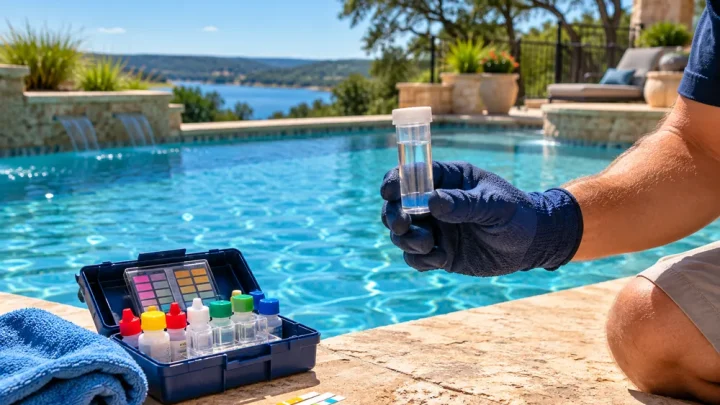
A practical guide to weekly cleaning, water testing and equipment checks for Lake Travis and Hill Country pool owners.
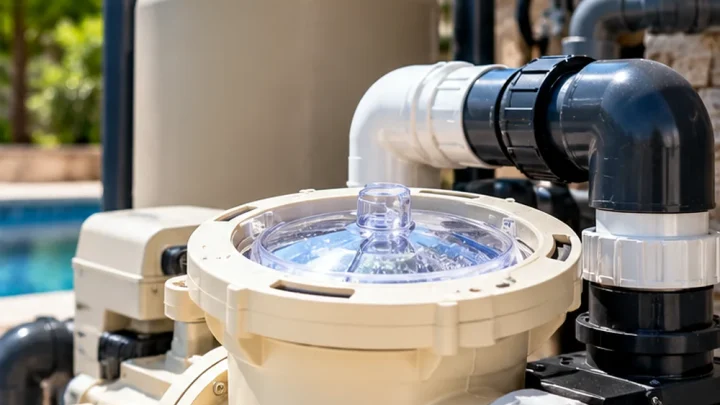
Low flow, air bubbles or a noisy pump? Learn what you can observe safely and when pool equipment needs professional diagnosis.
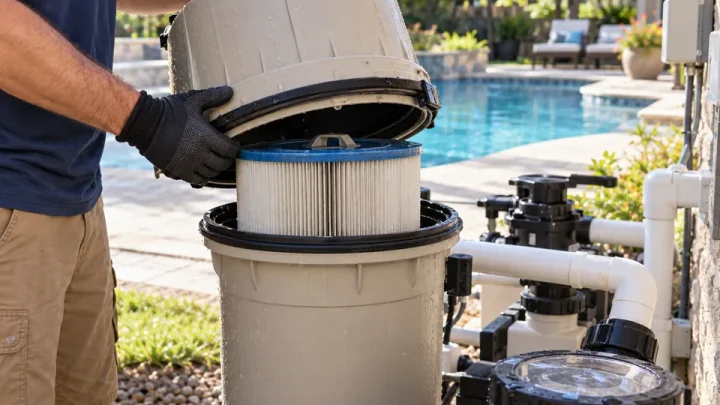
Cartridge, DE or sand? Learn the practical signs of a dirty filter and why your pool’s normal pressure matters more than a calendar.